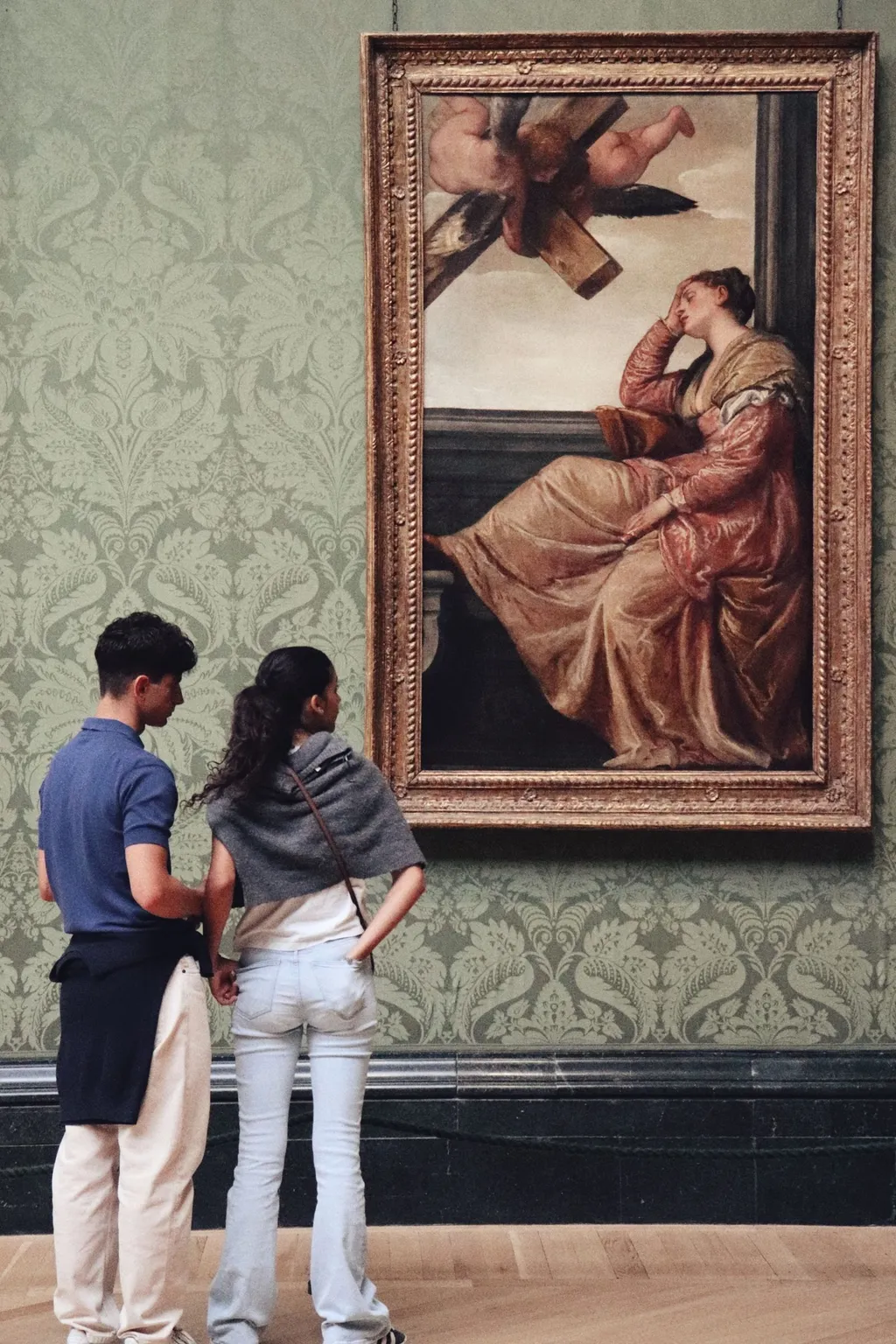
For museums & cultural institutions
Keep learning after the visit.
Your visitors spend an hour with your collection, then they're gone. New Schools keeps the conversation going at home, grounded in your own material, and shows you who kept learning.
Opening an exhibition in the next 6 to 12 months? That's the right moment to start.
What we hear from museums
Three things every learning team tells us.
- 01
Income beyond tickets
“We need income that doesn't depend on tickets and subsidy.”
Courses built on your collection, taught by your own educators or local makers, bring in income after the visit.
- 02
Audiences under 35
“Few visitors under 35, and the ones who come don't come back.”
A conversation on their own phone, at their own pace, is how younger visitors like to learn.
- 03
Contact after the visit
“We only see people for an hour, then they're gone.”
The visit carries on at home, and you can see that it does.
01 · The visitor's side
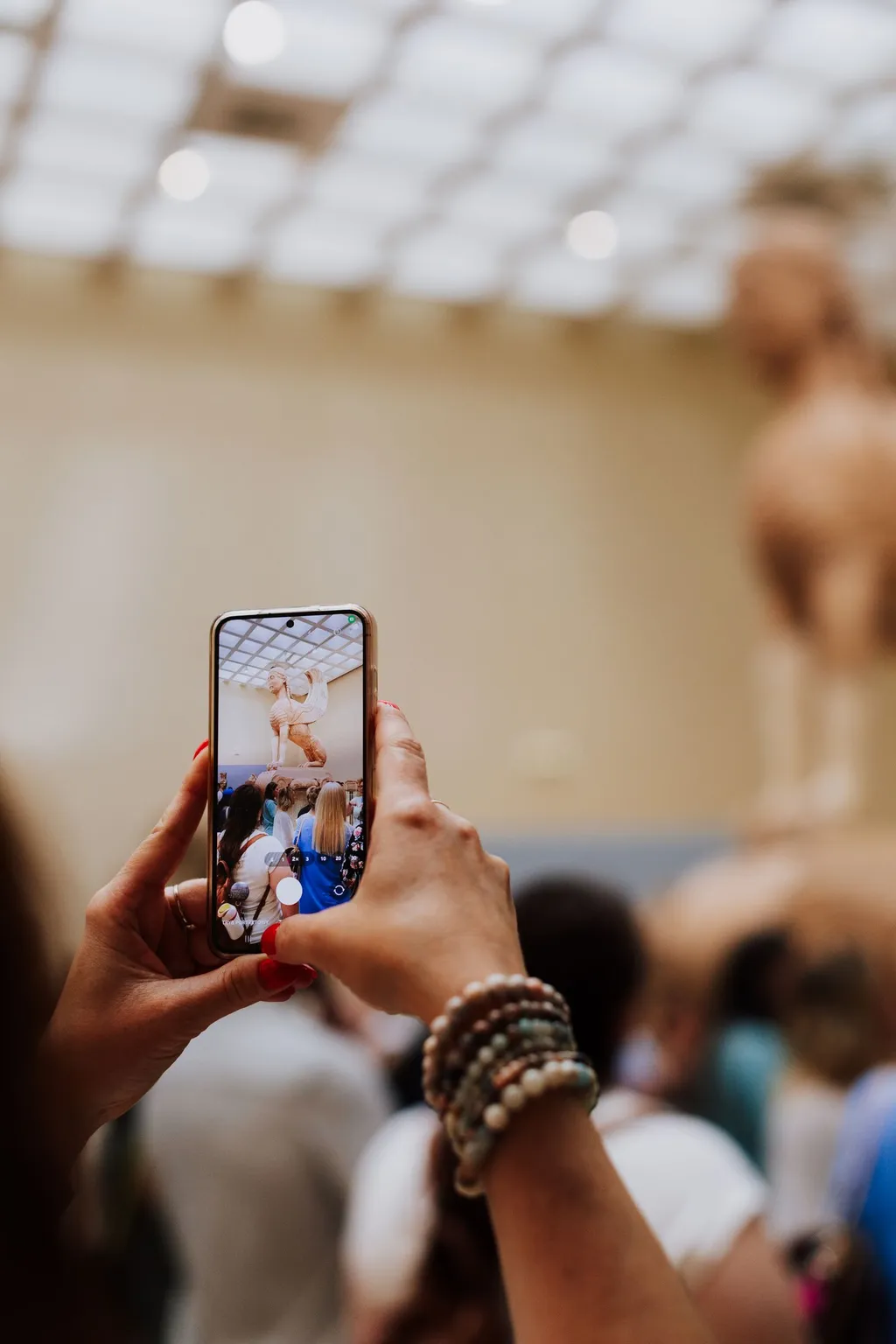
A host in the gallery, on their own phone.
- Scan a code at an artwork. Nothing to install in the room.
- Ask questions the way you'd ask a curator. Answers come from your material, in your tone, and the host says when it doesn't know.
- Carry on at home, right where they stopped.
- Find courses on what they've just seen, taught by local makers.
02 · The museum's side
What you see.
- InsightsWhich rooms start conversations, what visitors ask and where they stop, per exhibition.
- SentimentHow visitors talk about your collection afterwards.
- Footfall from nearbyVisitors who arrive from museums and heritage sites around you, and where they go next.
All of it ready for your board and your funders.
Your team
Light work for your team.
- 01
You send
Send us your exhibition texts and images.
- 02
We build, you approve
We build the characters. Your curators approve each one.
- 03
We place the codes
We place the codes in the rooms.
Your ticketing, your website and your current guide stay as they are.
Tickets
Your checkout stays yours.
A ticket button in the conversation opens your own ticketing. We sell nothing on your behalf and take nothing from your tickets.
Your data
Your data stays yours.
Belongs to you
Your texts, images and visitor conversations belong to you.
Never used to train AI models
Your material is used only to run your characters and is never used to train AI models.
Removed at any time
Curators approve every character and can remove it at any time.
Counts per exhibition
No tracking cookies and no visitor profiles: your reports show counts per exhibition.
Your own app
Already have an app?
Keep it. We can work inside your own app, so your visitors find us where they already are.
No app? No problem. Visitors start in their browser, or in the free New Schools app from December.
The pilot
One exhibition, six weeks.
We build a small set of characters from your material. Your curators approve each one. Codes go in the rooms. After six weeks you get the figures: how many visitors kept learning, for how long, and what they asked.
The pilot has a fixed price, agreed in writing before we start.
Questions museums ask
Before you book a demo.
How much work is it for our team?
You send us your exhibition texts and images. We build the characters, your curators approve each one, and we place the codes in the rooms.
Do visitors need to download an app?
No. They scan a code at an artwork and start in their browser, with nothing to install in the room.
What happens to our material and our visitors' conversations?
They belong to you. Your material is used only to run your characters and is never used to train AI models. Your reports show counts per exhibition, with no tracking cookies and no visitor profiles.
What if a character doesn't know the answer?
It says so. Answers come from your material, in your tone. Your curators approve every character and can remove it at any time.
What does a pilot cost?
A pilot is one exhibition for six weeks, at a fixed price agreed in writing before we start. We take nothing from your tickets.
Next
See it with your own collection.
A 30-minute session, online or at your museum, with a character built from a collection like yours.